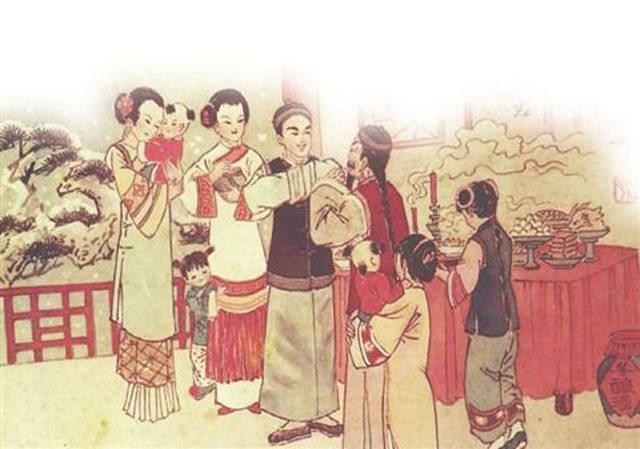
The Winter Solstice is also known as the Winter Festival or the Day of Transition. It is an important solar term in the lunar calendar and is a traditional festival of the Chinese nation. Since ancient times, the Winter Solstice has been regarded as a major festival. Even the "Qing Jia Lu" records that "The Winter Solstice is as significant as the New Year." People believe that the Winter Solstice is the natural transformation of the two opposing forces of yin and yang, a blessing bestowed by heaven, and a lucky day, and therefore it should be celebrated.
Winter has arrived, and it is a good time to pray for blessings.
Since the Zhou and Qin dynasties, up until the Han dynasty, people regarded the Winter Solstice as the "Winter Festival" and the government would hold congratulatory ceremonies, known as "Celebrating the Winter". The government would have official holidays, and people would greet each other by "paying respects to the Winter", and this custom was at its peak during the Tang and Song dynasties. In the Ming and Qing dynasties, common people would offer sacrifices to their parents and elders on this day, and the emperor would conduct the grand ceremony of worshipping Heaven, called "Circling the Heaven on the Winter Solstice".
With ingenious thinking, convey the charm.
Sixguofu Jewelry adheres to traditional culture and collaborates with the China Cultural Relics Exchange Center. Using ancient national treasures as prototypes, each piece is meticulously crafted and each design is uniquely creative. Together, they have created the "Fuyun · Museum Treasures Collection" cultural gold series. It interprets the ancient meaning, conveys the new trend, conveys Chinese auspiciousness, and showcases the Eastern charm.
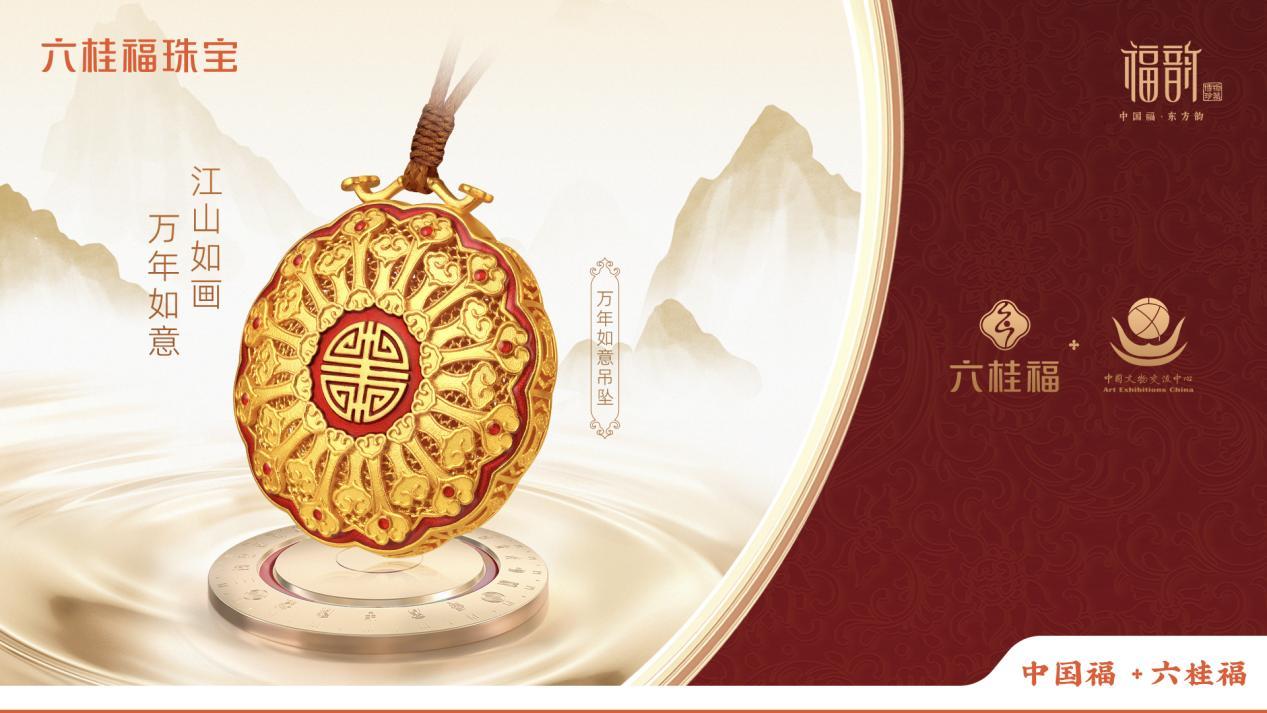
The landscape is like a painting. May you have good fortune for all eternity.
The "Six Guifu Fu Yin - Natural History Treasure Collection" series of "Ten Thousand-Year Good Fortune" pendant is inspired by the "Golden Beaded Ten Thousand-Year" (a piece from the collection of the Palace Museum of the Qing Dynasty). During the 60th birthday celebration of Emperor Qianlong, the ministers jointly funded the production of sixty golden-thread-woven wish symbols as offerings to the emperor. The original item was of exquisite craftsmanship and delicacy. The itself carries the meanings of auspiciousness and smoothness, and is a valuable gift that embodies good wishes such as praying for blessings and warding off misfortune.
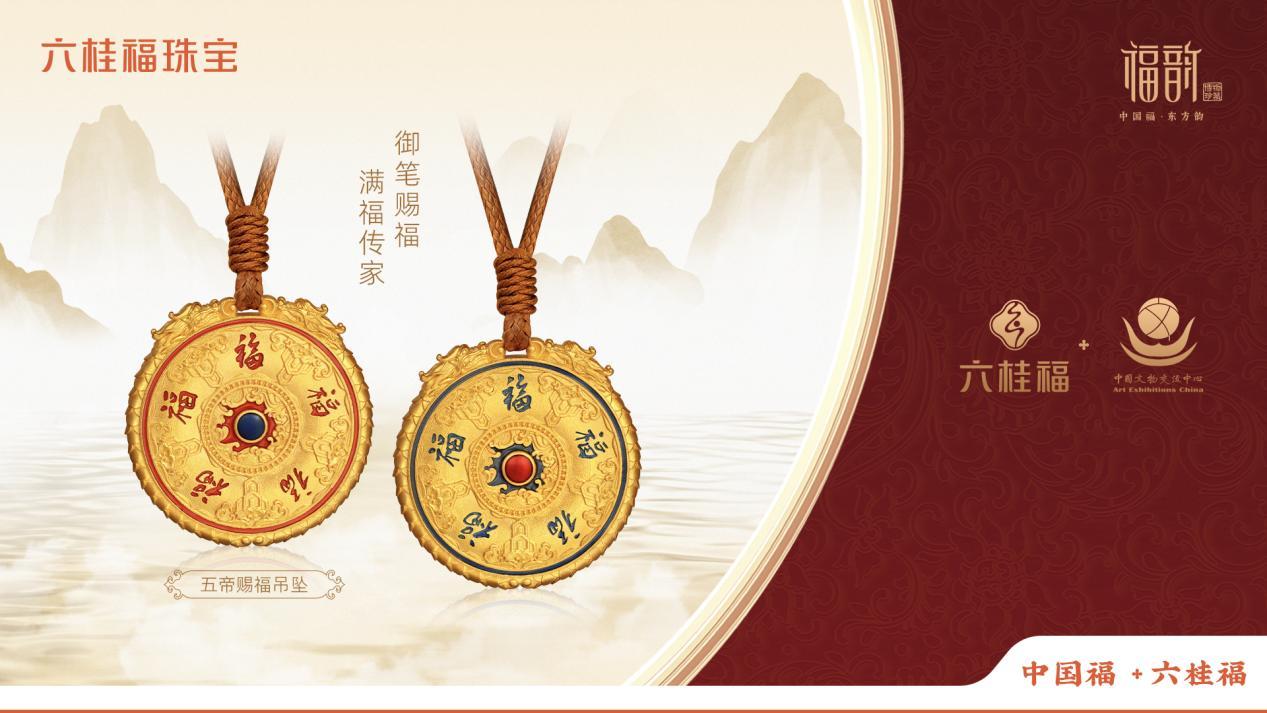
The Five Emperors bestow blessings; prosperity is passed down through generations
Liu Guifu Fu Yin - Natural History Treasure Collection Series - Five Emperors' Blessing Pendant. The prototype is the "Qing Dynasty - Handwritten Five Blessings Picture" housed in the First Historical Archives of China. The "Five Blessings Picture" is made by using the "Fu" characters written by the five emperors - Kangxi, Yongzheng, Qianlong, Jiaqing, and Daoguang - themselves. The relief technique is decorated with waves and cliffs patterns as well as dragon patterns, presenting a grand and noble appearance. These five emperors' reigns are consecutive, carrying the auspicious meaning of passing on blessings from generation to generation and having five generations living together in harmony.
Good luck and peace, everything goes smoothly
Liu Guifu Fu Yin - Museum Treasures Collection Series - "Yun Guan Kuan Qi" pendant. The original artifact is the "Han Dynasty Zuo Tong Gold Bo Shan Furnace" housed in the Hebei Museum. It was a bronze vessel used as an incense burner or warming stove during the Western Han Dynasty. Due to its shape resembling the legendary sea island - Bo Shan, it was called "Bo Shan Furnace". This vessel combines elements such as the sacred mountain, the sea, the dragon, and strange beasts, reflecting the belief system of the ancients seeking immortality and enlightenment. It is one of the precious cultural relics from the Han Dynasty. The double-layer concentric circle structure allows for 360-degree rotation on the front, symbolizing good fortune and auspiciousness when opportunities come.
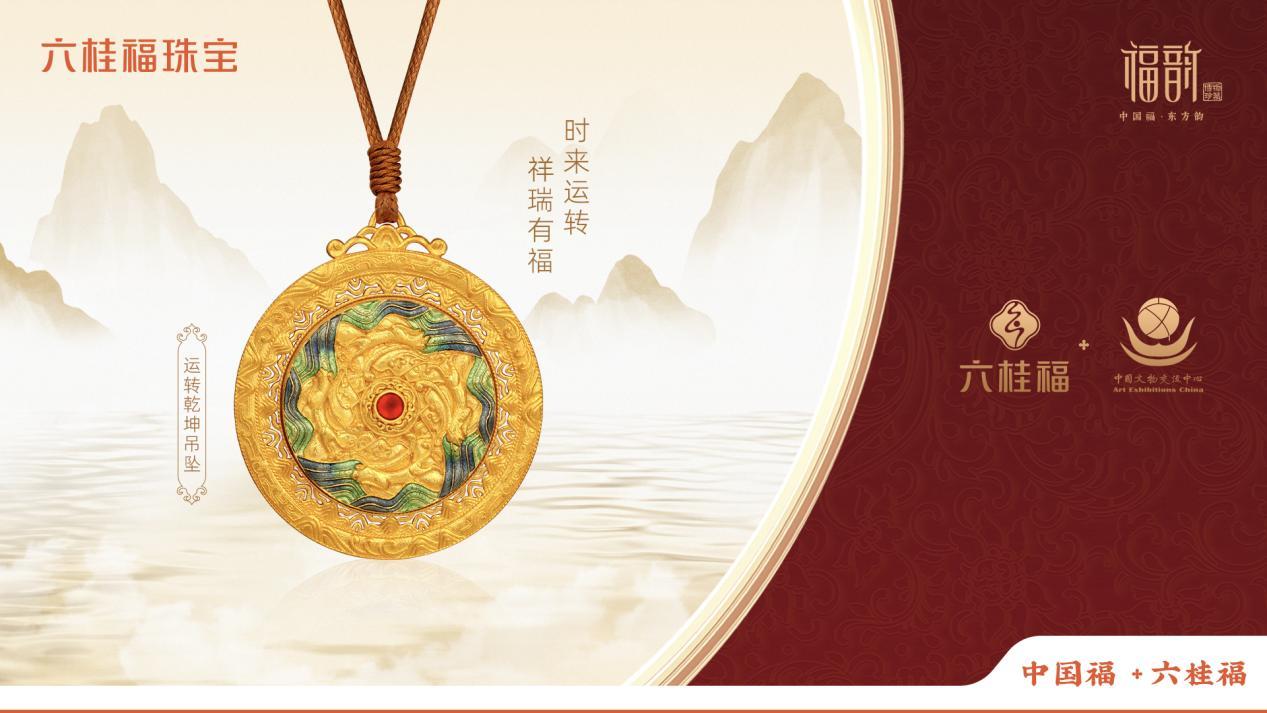
Through national treasures, we can understand history. Wearing Fu Yin jewelry brings the legend to life. The Sixgui Fu jewelry combines the ingenious designs of national treasures with the ancient craftsmanship of the Six Yin method; it integrates the essence of Chinese civilization and creates the ultimate product of ancient gold craftsmanship. By adhering to craftsmanship and creating a new interpretation of "Fu culture", owning Sixgui Fu means embracing Chinese Fu!