Sixguofu, why is it called "Gu"? "The most precious among flowers, the noblest among people." With the unique characteristics of the Gu culture, Sixguofu jewelry has comprehensively updated its brand positioning - Chinese Fu - Sixguofu.
Fuk Culture is the most influential and widespread mainstream core culture of the Chinese nation, and together with Gui Culture, it constitutes the cultural genes of the "Six Gui Fuk" brand. Based on this core, Six Gui Fuk, through the six dimensions of "Praying for Blessings, Enriching Prosperity, Health and Longevity, Receiving Joy, Bringing Wealth, and Opening Success", in combination with the "Fuyun" series of ancient traditional craft gold, jointly interprets the six spiritual connotations of Chinese traditional culture, thereby conveying Chinese blessings and highlighting the Eastern charm.
Liugufu is also the first jewelry brand in the industry to propose the brand proposition of "Chinese Fortune".
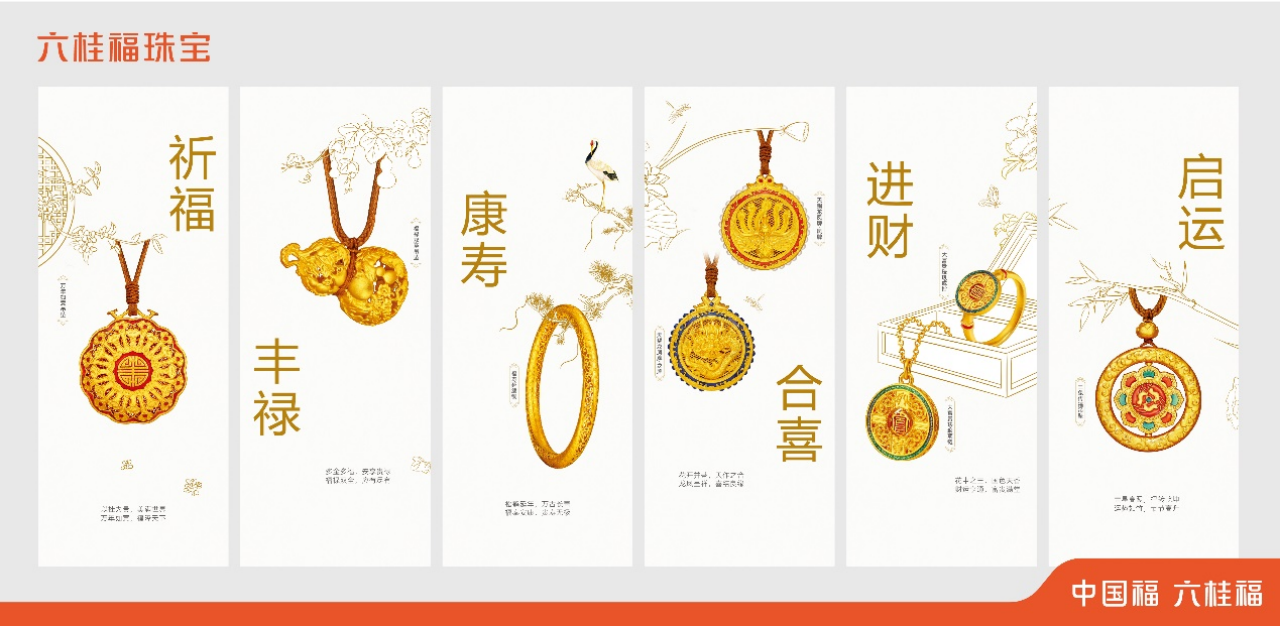
Liugufu, with "gui" meaning "prayer" or "blessing"
"With a devout heart, one can fulfill their prayer wishes. True gold does not fear fire, and true sincerity will surely lead to fulfillment."
The character "Fu" has become a commonly used auspicious symbol due to its connotation of good fortune. It reflects the public's pursuit and yearning for a happy life. People believe that "with sincere heart, it will work", just as pure gold does not fear fire. "Praying for blessings" is achieved through a devout heart to fulfill one's desired wishes.
The "Fu Yun - Natural History Collection" 10,000-Year Good Fortune Flower Wire Pendant is modeled after the precious item from the Palace Museum - the gold filigree "10,000-Year Good Fortune". The intangible cultural heritage flower wire craftsmanship fully demonstrates the grandeur of the royal court. Moreover, by leveraging the inherent auspicious and prosperous connotations of the (a symbol of good fortune and smoothness), it expresses the beautiful wishes of praying for blessings and warding off misfortune.
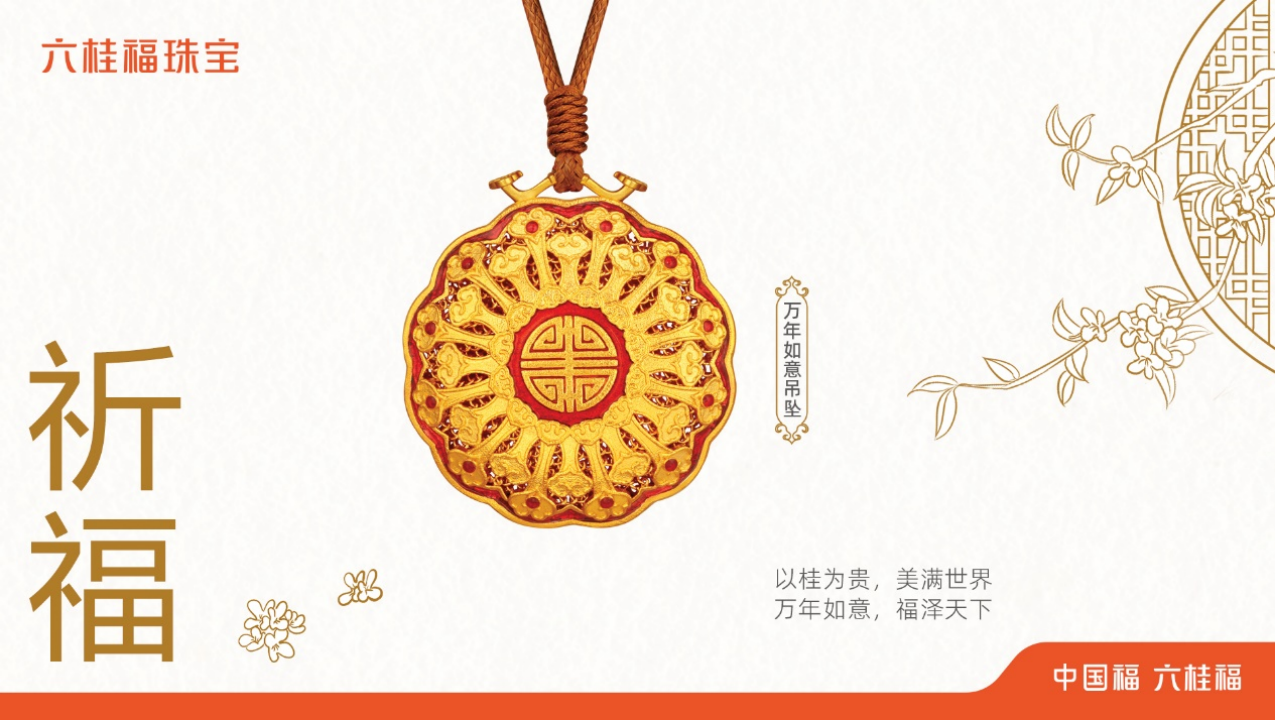
Liugufu, with "gui" meaning "rich" and "fenglu" meaning "prosperity"
"To achieve great accomplishments and fulfill the aspiration of radiance. With the ancient six-rhythm method, forge gold and create a brilliant crown."
"Fenglu" means "abundant wealth and happiness, enjoying noble status". In "Fu Zi - Ji Yan", it is stated: "Rich rewards and generous rewards make the world yearn for them." This shows that since ancient times, people have had the tradition of obtaining "fenglu" through continuous efforts. And the gourd, with its round and plump shape and the harmonious sound of "fu lu" in its name, carries the beautiful connotations of wealth, happiness and good fortune.
The "Fuyun - Natural History Collection" Fu Lu Double-Embellished Pendant was inspired by the collection from the Palace Museum - the Qing Dynasty bamboo-carved gourd-shaped box. It meticulously replicates the original patterns and is crafted using the Six-Rhythm Ancient Craftsmanship. The pendant features the carving of vines, branches, and flowers on the gourd, resulting in an overall delicate and lifelike appearance.
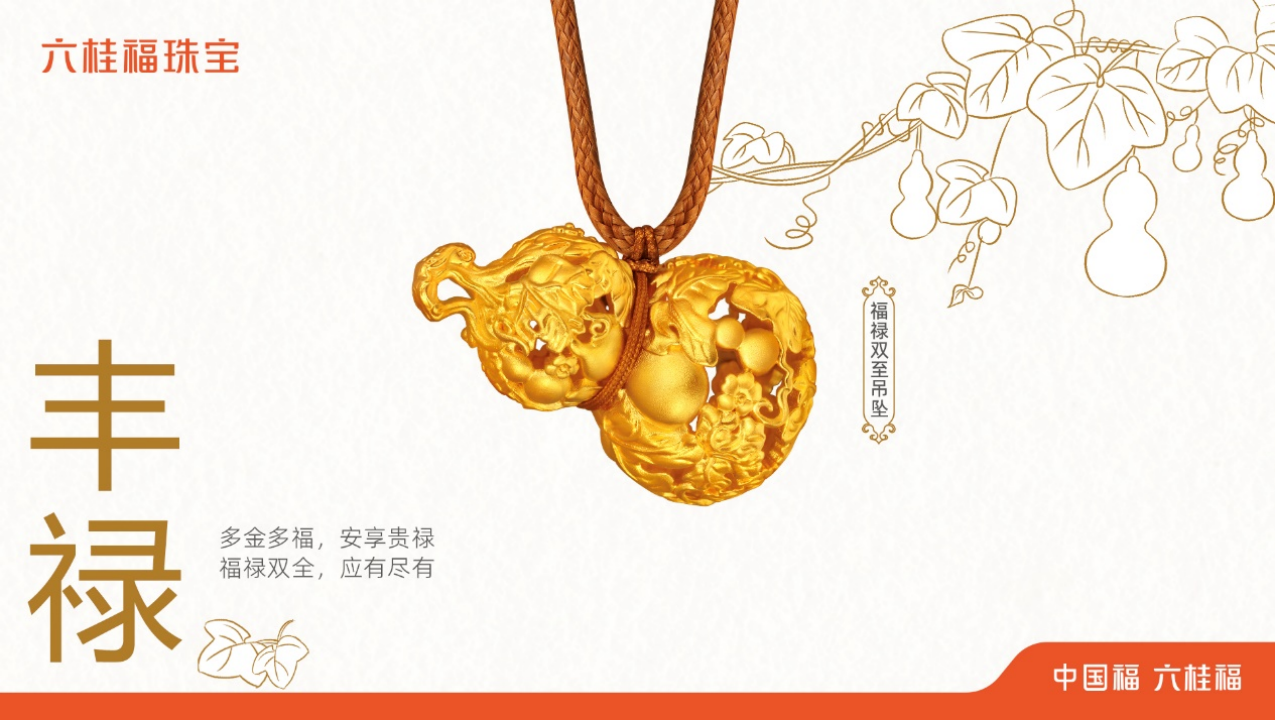
Liugufu, with "gui" meaning longevity and "kang" meaning health
"By bringing joy to the body and mind, one can achieve the wish of a long life. Time is like gold; only through its wear and tear can one attain a more carefree and elegant demeanor."
Prosperity and health, eternal life; longevity like a pine and a crane, enduring forever. The Penglai fairyland described in "Shan Hai Jing", the "immortality pills" concocted by ancient emperors, and the congratulatory words "good fortune like the sea, longevity like the mountains" all reflect people's yearning for a life of prosperity, health, and happiness after enduring the test of time.
The "Fu Yin - Forbidden City" Fu and Shou Continuous Bracelet is based on the "Qianlong-style enamel-painted Fu character and lotus pattern jar" from the Forbidden City's collection. The Fu characters are arranged around the inner and outer rings, with detailed relief carvings. It is grand and elegant, symbolizing continuous blessings and longevity, and embodies all hopes and beauty.
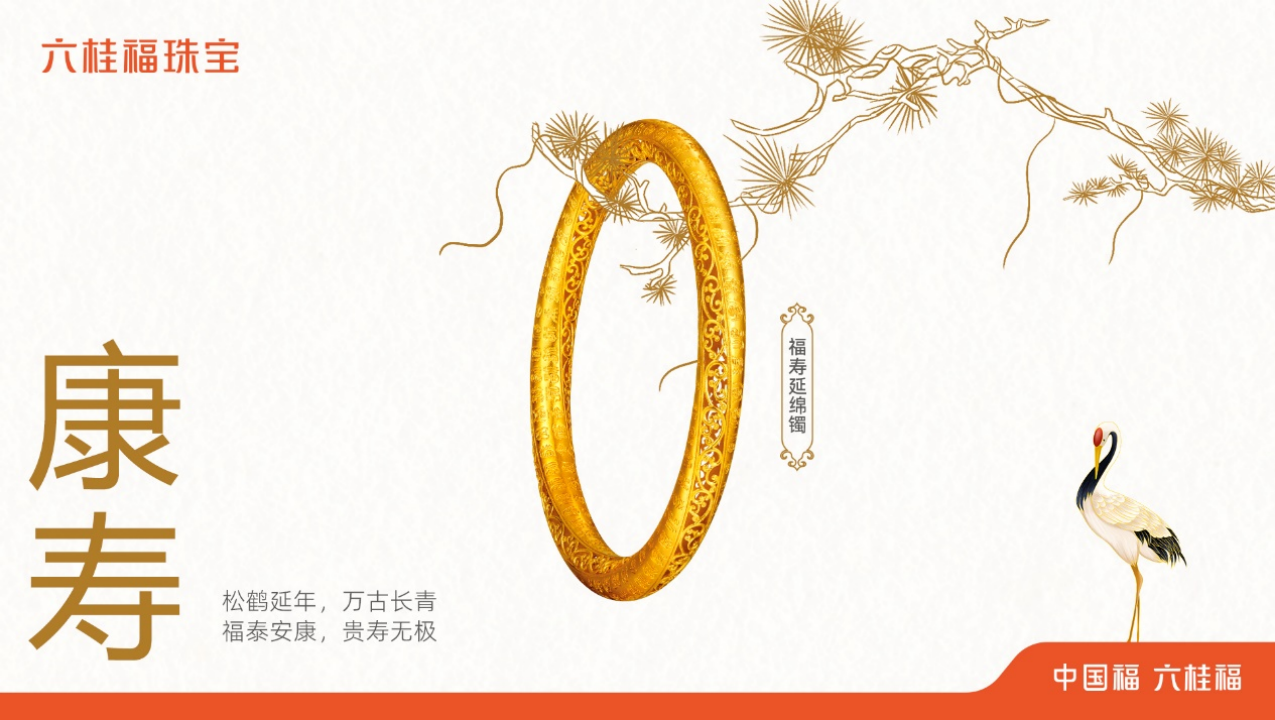
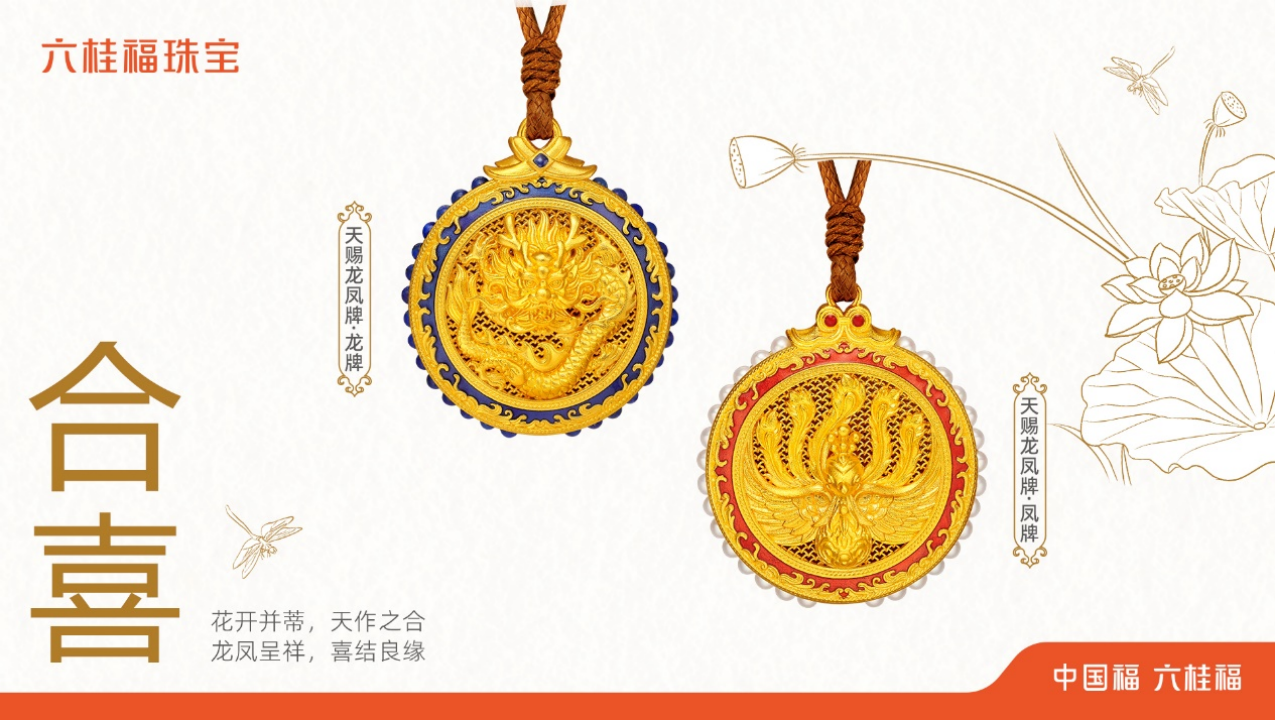
Liugufu, with "gui" meaning "union" and "xi" meaning "harmony"
"By aligning our hearts and minds, we fulfill our wish for a harmonious marriage. The delicate threads in our fingers flow together, sealing the precious bond of love."
To find a true love and remain together until old age is a beautiful wish that people have held since ancient times. This represents people's long-standing pursuit and yearning for romantic happiness. From mutual compatibility to getting married, both parties need to jointly cherish and protect a precious and harmonious relationship.
"Fuyun · Forbidden City" Palace Wedding Ceremony Double-Headed Dragon and Phoenix Plate. Inspired by the dragon and phoenix robes worn by the empress and emperor during their wedding ceremony, the dragon plate is decorated with golden dragons and colorful clouds, while the phoenix plate features a golden phoenix. The plate is made of filigree work with a base of turquoise stones, presenting a auspicious and festive look. It conveys the beautiful meaning of harmonious marital life and eternal unity between the emperor and empress.
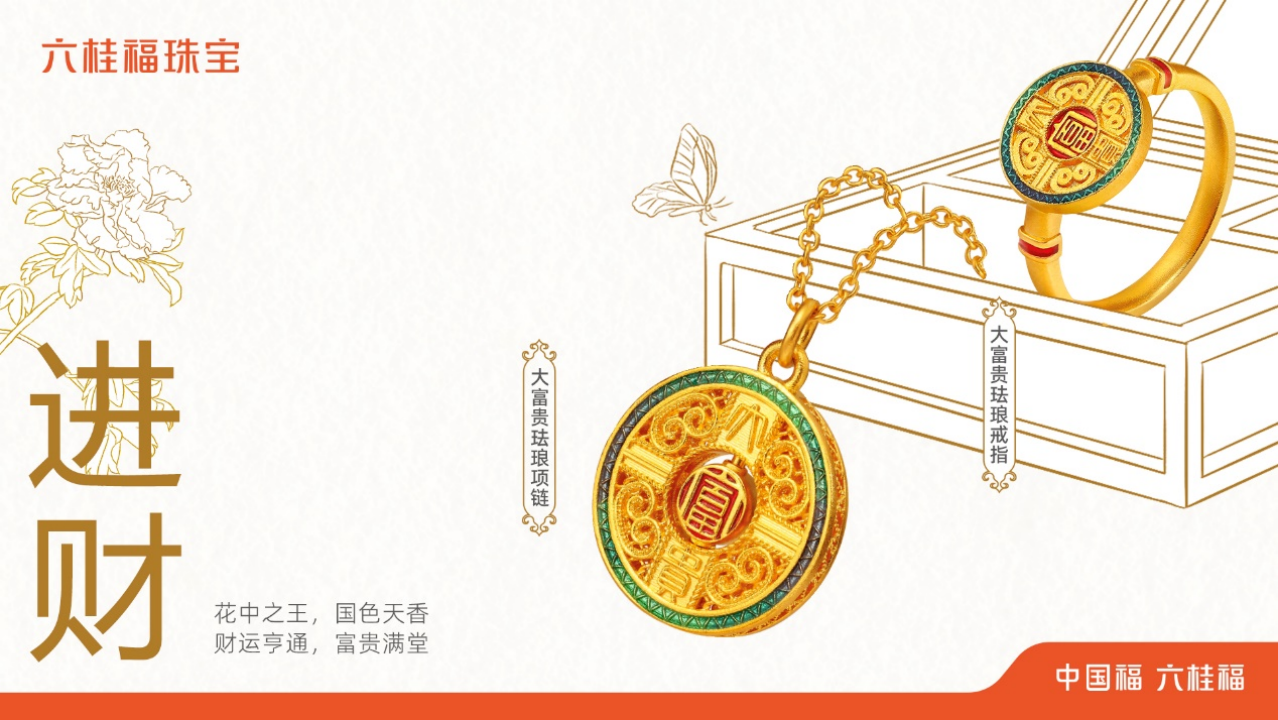
Liugufu, "Gu" means "prosperity" and "jin" means "gain"
"By cultivating virtue, one can accumulate strength and achieve the aspiration of prosperity. By doing things in the right way, one will gain the support of many, and life is truly invaluable."
In "Records of the Grand Historian", Sima Qian wrote: "The world is bustling with people, all seeking profit; the world is chaotic with people, all pursuing gain." Since ancient times, people have actively advocated a correct view of wealth, emphasizing that "virtue is the source of wealth", that diligence can generate wealth, and that kindness can accumulate blessings. Only by cultivating oneself and upholding virtue, and doing so in an ethical manner, can one have a continuous flow of wealth.
The "Fu Yin · Emperor Qin and Emperor Wu" grand wealth set was inspired by the wealth-themed tiles from the Han Dynasty. The center of the pendant is a rotatable structure, with a "Fu" character in the middle symbolizing continuous wealth. The blue and green gradient enamel is combined with the hollow scroll-leaf pattern filigree, presenting a delicate and exquisite design that inherits the beautiful wish for prosperity and flourishing.
Liugufu, Gui is in Qi Yun
"Things will take a turn for the better and lead to the fulfillment of one's wishes. With sincere efforts, even stones can be transformed into gold, and gold can be engraved on metal."
The Book of Changes states, "Movement leads to the circulation of qi, and qi leads to the occurrence of events." This indicates that one's actions can influence their fortune. Qi Ji emphasizes that by performing sincere and genuine actions, one can influence their fortune, hoping for favorable circumstances to arrive, unstoppable momentum, continuous prosperous events, and constant good luck by their side.
The design inspiration for the "Fu Yin - Dunhuang" three-bunny blessing pendant comes from the Sui Dynasty's tri-bunny co-earing scroll pattern in Cave 407 of Dunhuang. Rabbits, as one of the twelve Chinese zodiac animals, represent gentleness and wisdom. The tri-bunny co-earing pattern depicts three rabbits symbolizing wisdom sharing three ears and moving forward together, symbolizing continuous growth and endless flow.

What does "Guifu" mean? It is named "Fugui" because it represents the combination of "Feng" (good fortune) and "Fu" (auspiciousness). The Fu culture has a long history and is the cherished aspiration of the Chinese nation throughout generations, as well as the common wish and expectation of the Chinese people. Guifu uses gold to convey meaning and presents the "Fuyun" series of cultural and creative ancient gold products to showcase its new brand positioning, spreading Chinese Fu and highlighting the Eastern charm.